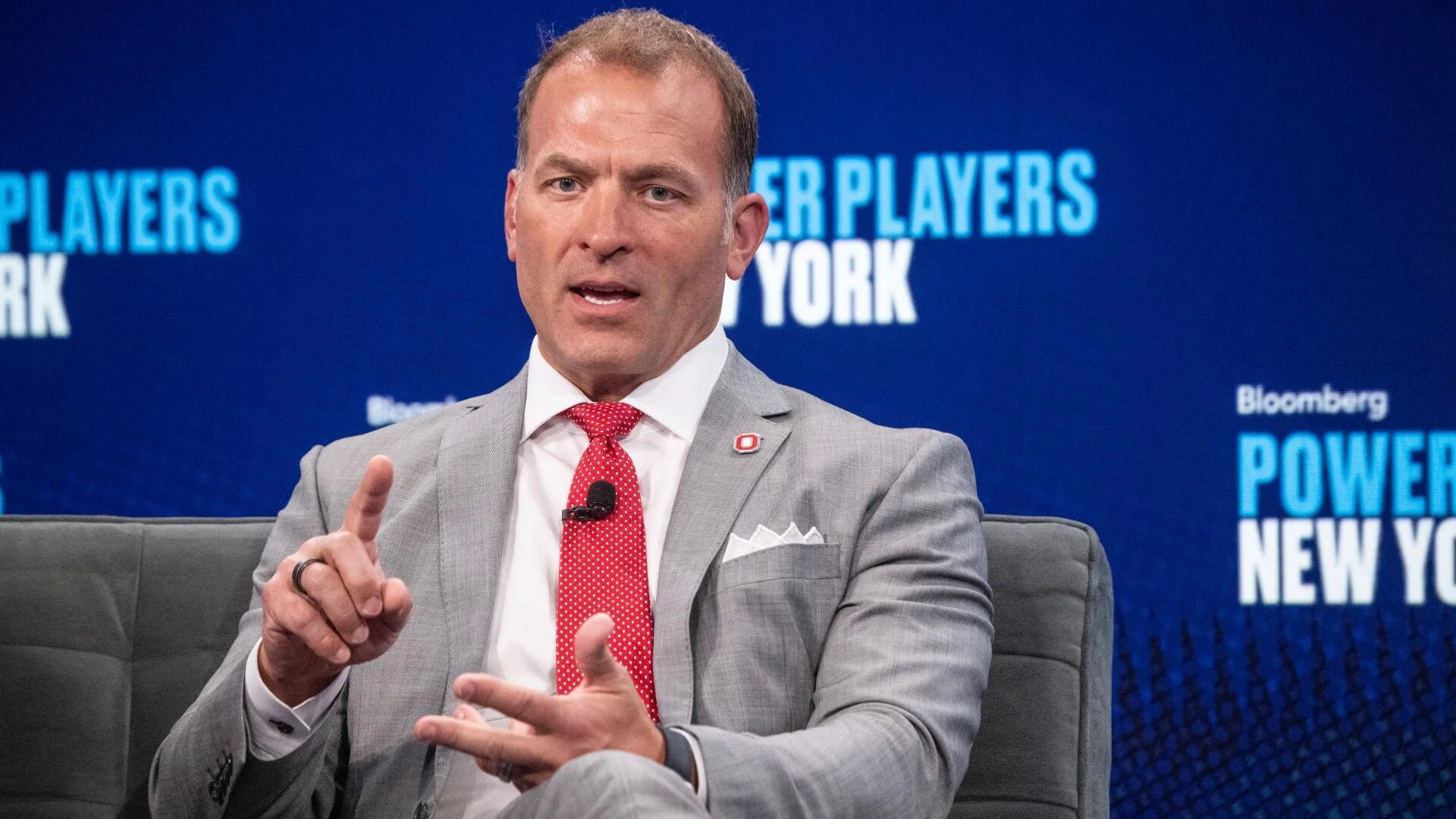
Ohio State athletic director Ross Bjork said the Big Ten is considering a results-based scheduling model similar to the NFL's. He made the comments on "The Ryan Day Show" on 97.1 The Fan.
Under the current approach, the conference based its football opponent rotations on historical records when it first added West Coast teams. Bjork said that model did not account for how programs change. "They looked at historical rotations over the course of everyone's football life," Bjork said. "Indiana was not what Indiana is today when they set the model. Same thing with UCLA."
Bjork said changes could begin with the 2028 season. Opponents would not be set until after the 2027 season. Under the proposed model, the next season's opponents would depend on how teams finished the previous year, with weaker teams getting easier schedules and stronger teams facing tougher ones. Rivalry games would stay fixed. "Obviously, we have the biggest one," Bjork said, referring to Ohio State vs. Michigan.
Bjork said the change is needed because of parity created by NIL and the transfer portal. "We're having active conversations that we need to change the way we schedule," Bjork said. "... There's a lot more parity in the system."
The report notes one potential problem. Current transfer portal and NIL rules let players move between teams every offseason, which can create more volatility from season to season than the NFL sees, where multi-year contracts provide more roster stability. The report also says scheduling will be a major topic as the 24-team College Football Playoff approaches.